 Hands-on skills
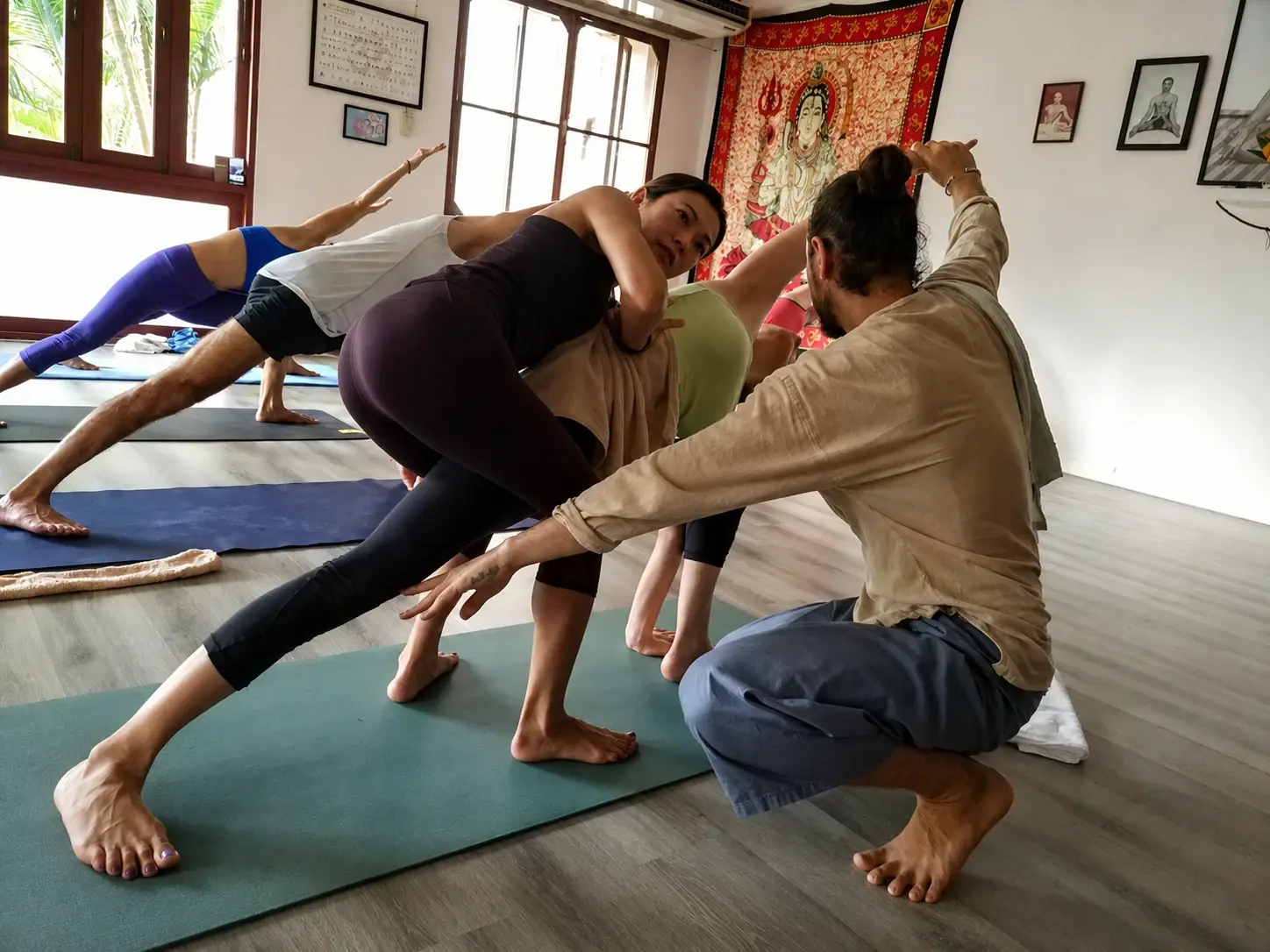
Advanced Art of Adjustment
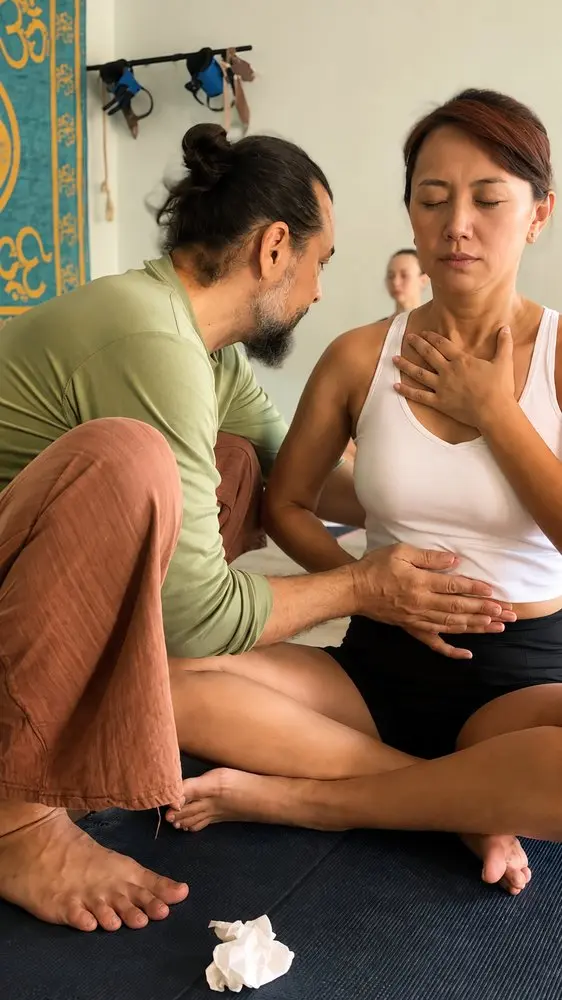
Art of Adjustment becomes a significantly deeper and more intensive component of the 300-hour program.
Students go beyond learning individual adjustments and develop the ability to observe and understand different bodies, levels of practice and individual limitations.
The training includes detailed work with alignment, modifications, contraindications and therapeutic considerations, as well as the appropriate application of hands-on adjustments for different practitioners.
Students have substantially more time to practice adjustments, receive corrections and develop the sensitivity, precision and confidence required to work safely with students in a Mysore or Led environment.
The emphasis is on learning to see the body, understand what is needed and choose an appropriate way to assist, rather than applying adjustments mechanically.
 Teacher training
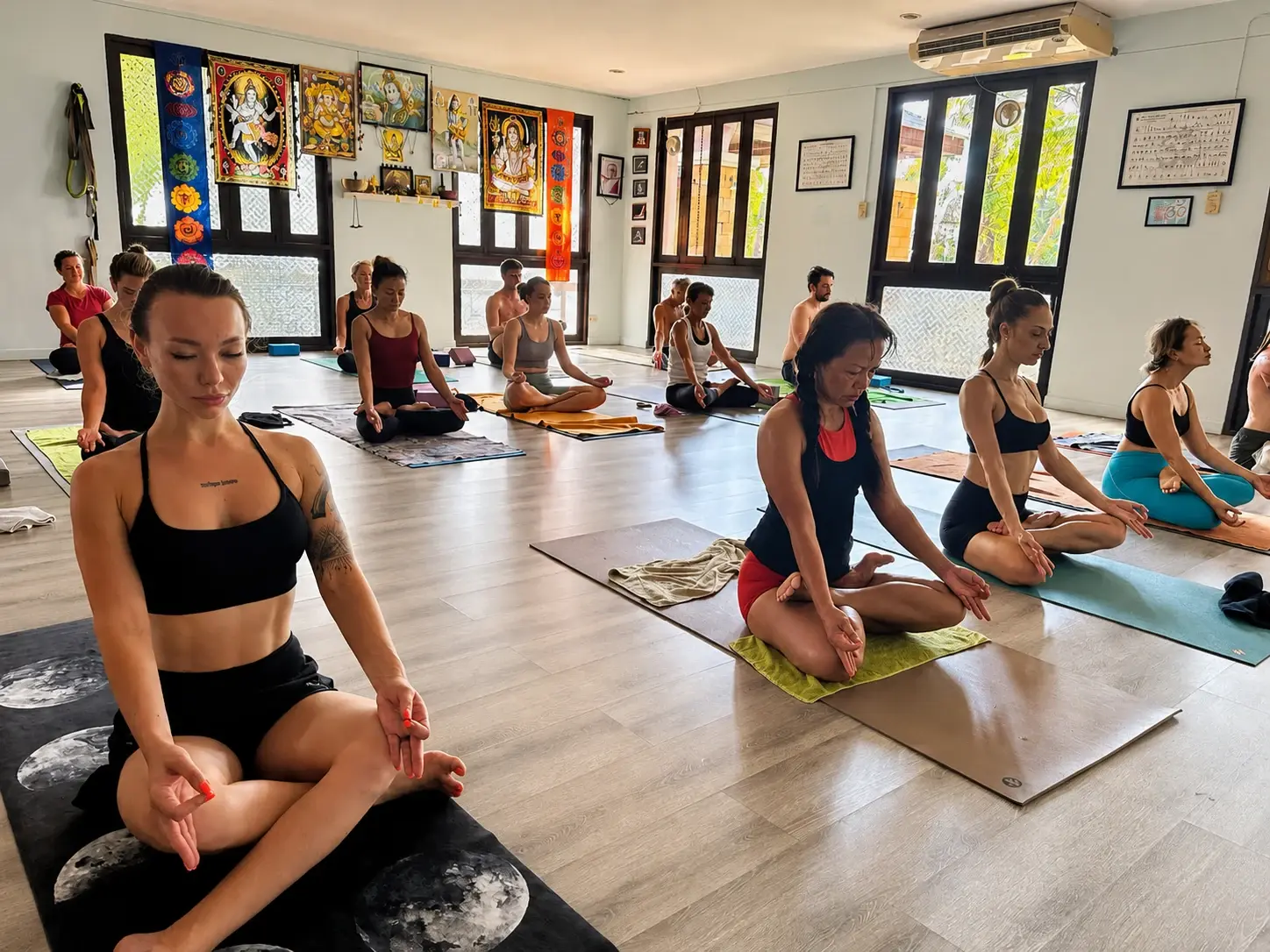
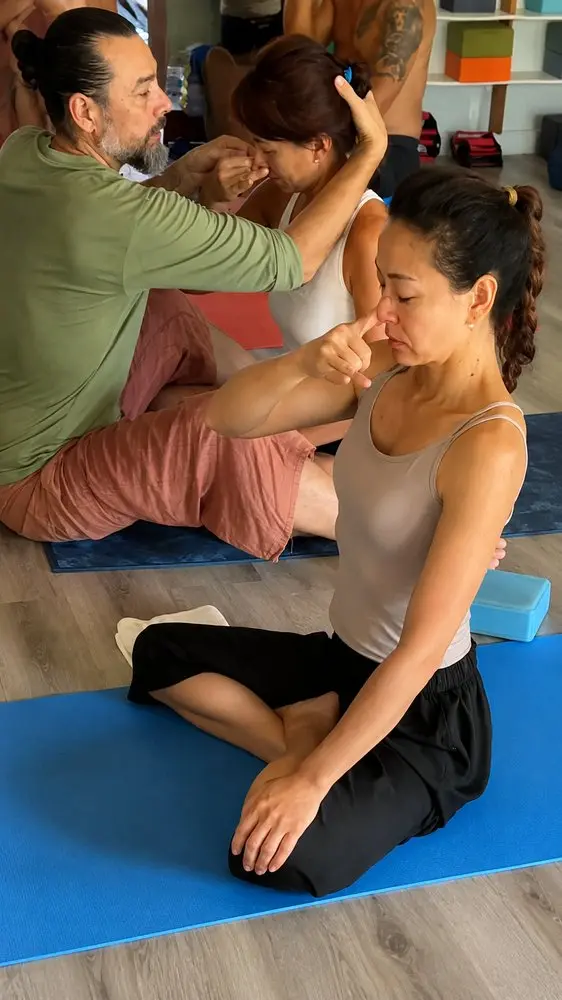
Pranayama Teacher Training
In the 200-hour foundation, students are introduced to Pranayama through theory and personal practice.
Within the advanced 300-hour training, Pranayama becomes a dedicated teacher-training discipline.
Students deepen their understanding of the principles, techniques, anatomy, effects and contraindications of Pranayama and learn how to structure and lead Pranayama practices for others.
The training includes:
- principles and philosophy of Pranayama
- anatomy and physiological aspects of breathing practices
- different Pranayama techniques and variations
- benefits and contraindications
- modifications according to individual needs
- the therapeutic application of selected techniques
- sequencing and structuring a Pranayama session
- verbal instruction and communication
- supervised teaching practice
The objective is to develop the ability to teach Pranayama safely, clearly and responsibly, rather than simply perform the techniques personally.
 Teacher training
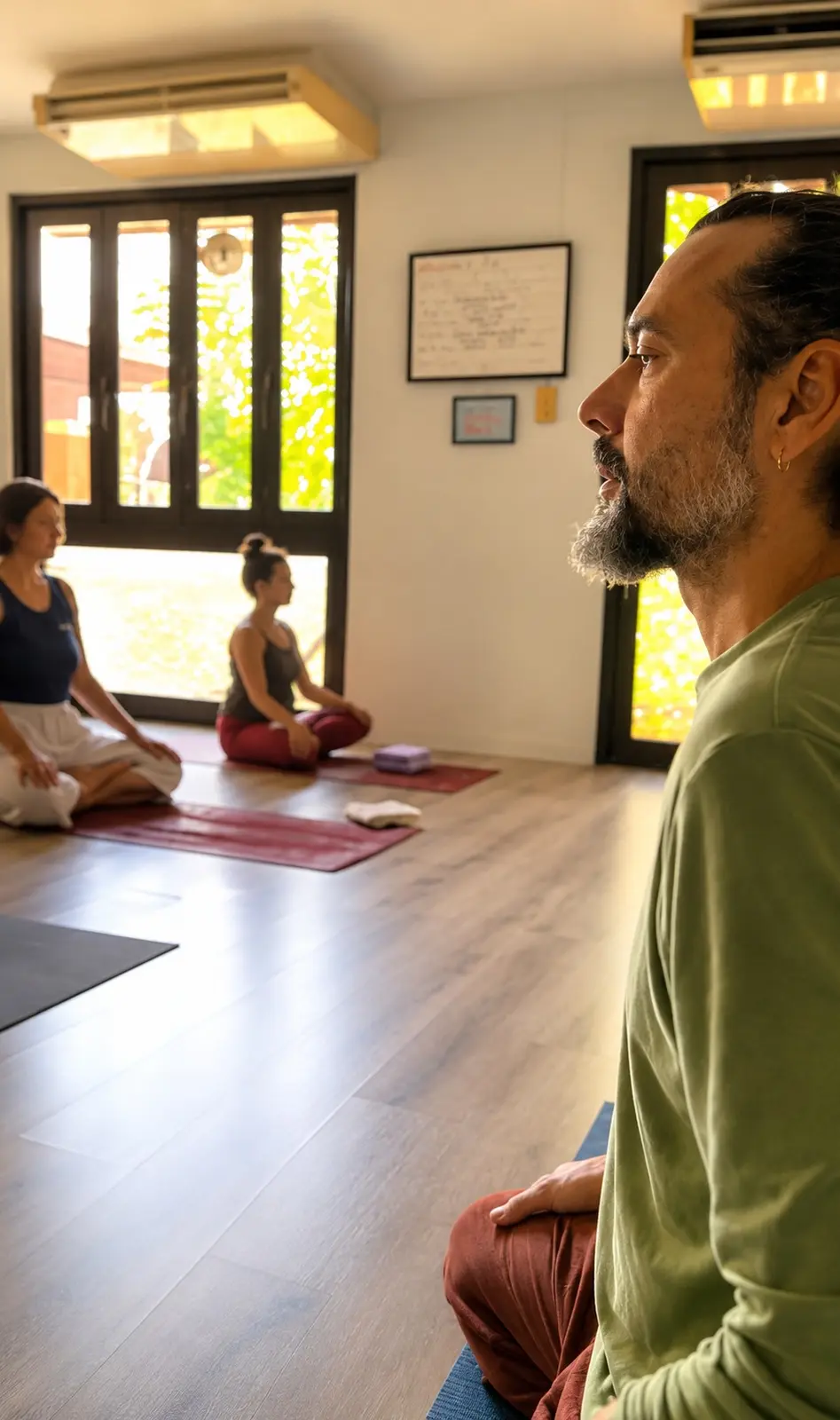
Yoga Nidra Teacher Training
The advanced training explores the structure and methodology of Yoga Nidra, preparation and introduction, voice management, language, pauses and intonation, timing, safety and appropriate modifications.
Students also learn how to respond to different experiences and reactions that may arise during the practice and how to communicate with practitioners before and after a session.
Most importantly, students have the opportunity to practice leading Yoga Nidra sessions and receive feedback, developing the confidence and practical skills required to teach the practice independently.
 Deeper understanding
Yoga Therapy
The 300-hour program also provides a deeper exploration of Yoga Therapy and its application within the teaching environment.
Students develop a broader understanding of how yoga practices may be adapted according to individual physical and psychological conditions, limitations and needs.
This knowledge supports a more responsible approach to teaching and helps students understand when a practice should be modified, adapted or approached with additional care.